It was Spring again today after Winter yesterday! I spotted movement in the garden out of the corner of my eye – Tonks chasing a butterfly! It looks a bit battered but still beautiful.

It was Spring again today after Winter yesterday! I spotted movement in the garden out of the corner of my eye – Tonks chasing a butterfly! It looks a bit battered but still beautiful.
It must be time for another Oxfam plug. Yes, I’m officially mad and will be walking 100km with my equally crazy friends and teammates on March 25th 2017. We have started training and fund raising. Check out and ‘like’ our Facebook page and our Oxfam page.
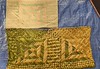
As one way of fund raising I am recycling old blankets and turning them into cushions. These are my first efforts. How much would you pay for one? Any old blankets gratefully received…

More work on the garden; we now have two veggie beds filled with soil – and a lot of garden waste that needs disposing of.
This afternoon I went to Waikato museum for the launching of a mighty tome called ‘The Great War for New Zealand: Waikato 1800 – 2000’.
We listened to a fascinating conversation between the author, Vincent O’Malley and Tom Roa from University of Waikato and Tainui. This article from Radio NZ gives more insight into the book
I think the key message for me was the idea that our history may be uncomfortable and often hard to face up to but that we have to own our history and listen to the stories that tell the truth of what happened. In countries all over the world, the truth of history is masked or distorted; often the stories that are told are from one side and the truth is forgotten.
Vincent O’Malley says that “Tainui have never forgotten the atrocities that were committed against their women and children at Rangiaowhia, for example. Or what really took place at Ōrākau. Those memories have been carried on down through the generations. They’ve even been reflected in the names people are given. For example, a common name for many women in Tainui was Mamae, or pain, across many generations to carry the remembrance of those events.”
On the other hand, the way that history has been remembered from the Pākeha point of view is very different. He suggests that “There was this period of myth-making followed by complete silence.” A couple of people stood up to own that they had grown up in New Zealand, close to some of the key historical sites and never knew what had happened. They had never learned the history in school and their parents didn’t know about it either.
The point was also made that whilst we might feel ashamed about what happened, we weren’t there and so shouldn’t own the guilt of association with our tūpuna. However, we should acknowledge the truth and learn from it.
Kuo pau ke tau maharaja
We must remember
I am looking forward to reading the stories that this book tells…

A day spent in the garden doing a major tidy up so we can plant some veggies. It was good to free the flowers from the weeds and let them display their glory. Fruit trees are blossoming and we have a wee globe artichoke!
We also belatedly celebrated Aonghas’ birthday at our favourite Italian restaurant. I am not allowed to post photos publicly of Aonghas so today’s photo is one from the garden!

A great end to Ulearn with an inspiring keynote from Karen. Was looking forward to getting home to see Gus and Nigel but it was not to be. Here’s the story.
 Fortunately, twitter buddies Anne-Marie and Monica came to my rescue, then Nigel drove over to pick me up. A long day!
Missing my wee man’s 17th Birthday today. He’s spending the day with Lachlan though so I’m sure he’ll have fun. In the meantime back at Ulearn16 it was the gala dinner and the Connected Educator team rocked it! Also caught up with my fellow fellows14.

Ulearn16. Connected Educator team. The Connected Crusaders.

Efellows14 together again albeit missing a couple of key players. Ben Britten and John Fenaughty noticeable by their absence. It was great to catch up though…

Final (but probably not) touches to workshop planning for ulearn. The escape to the Redwoods for a run.

Rotorua – a relaxing soak in the hot pools with a view of the lake and serenaded by seagulls